
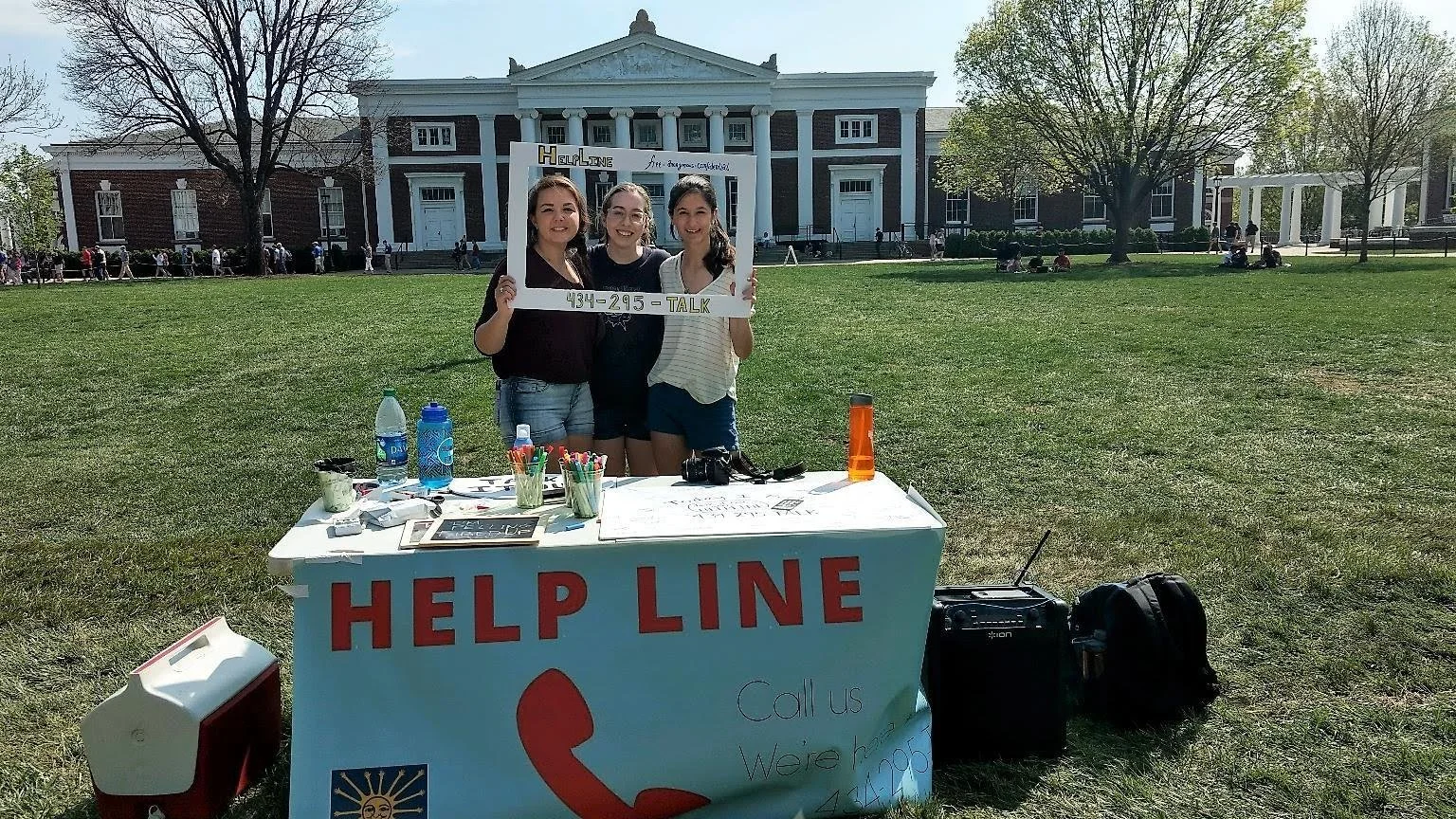
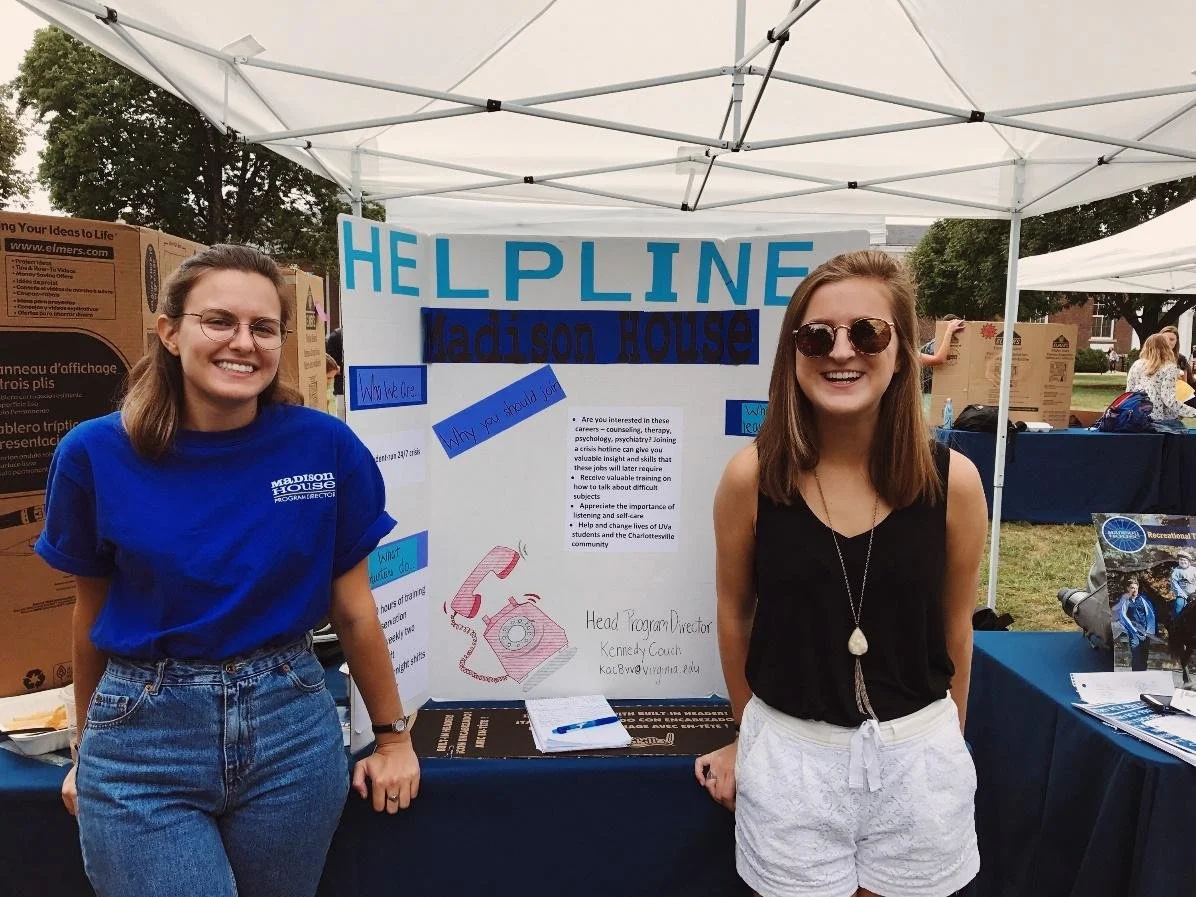
HELPLine program leaders recruiting at the student activities fair.
When Hannah Cooper transferred to the University of Virginia in 2015, she was eager to build connections and test her long running passion for psychology in real-world settings. She found her place at Madison House, joining the HELP Line—a student-run, anonymous crisis hotline for UVA and the Charlottesville community.
“I missed out on the traditional first-year dorm experience, so I was looking for a way to create meaningful relationships,” Hannah recalls. HELP Line gave her both community and her first real exposure to clinical skills.
The work was demanding, but transformative. Through training and shifts, Hannah learned the foundations of clinical interviewing: how to ask open-ended questions, build rapport, and respond with empathy.
“It was the first time I was exposed to therapeutic dialogue. We weren’t doing therapy, but it was deeply therapeutic work,” she explains. Hannah adds that it opened her mind to new cultures and backgrounds as well. For example, she received a day of training devoted to fostering understanding of LGBTQ+ lived experiences and building cultural awareness.
The hotline also confirmed her career direction. “I realized I could sit with people in difficult moments, really listen, and stay strong alongside them,” Hannah says. “That told me I was on the right path.”
After graduating from UVA in 2017 with degrees in psychology and cognitive science, Hannah took a summer to apply for positions before landing a research coordinator role at Children’s Hospital of Philadelphia (CHOP). Although her work in neurology was somewhat adjacent to psychology, she helped lead a multidisciplinary study on children with rare diseases and developed a neuropsychological battery to assess their cognitive functioning. The position became an innovative way for her to apply psychology within a nontraditional setting.
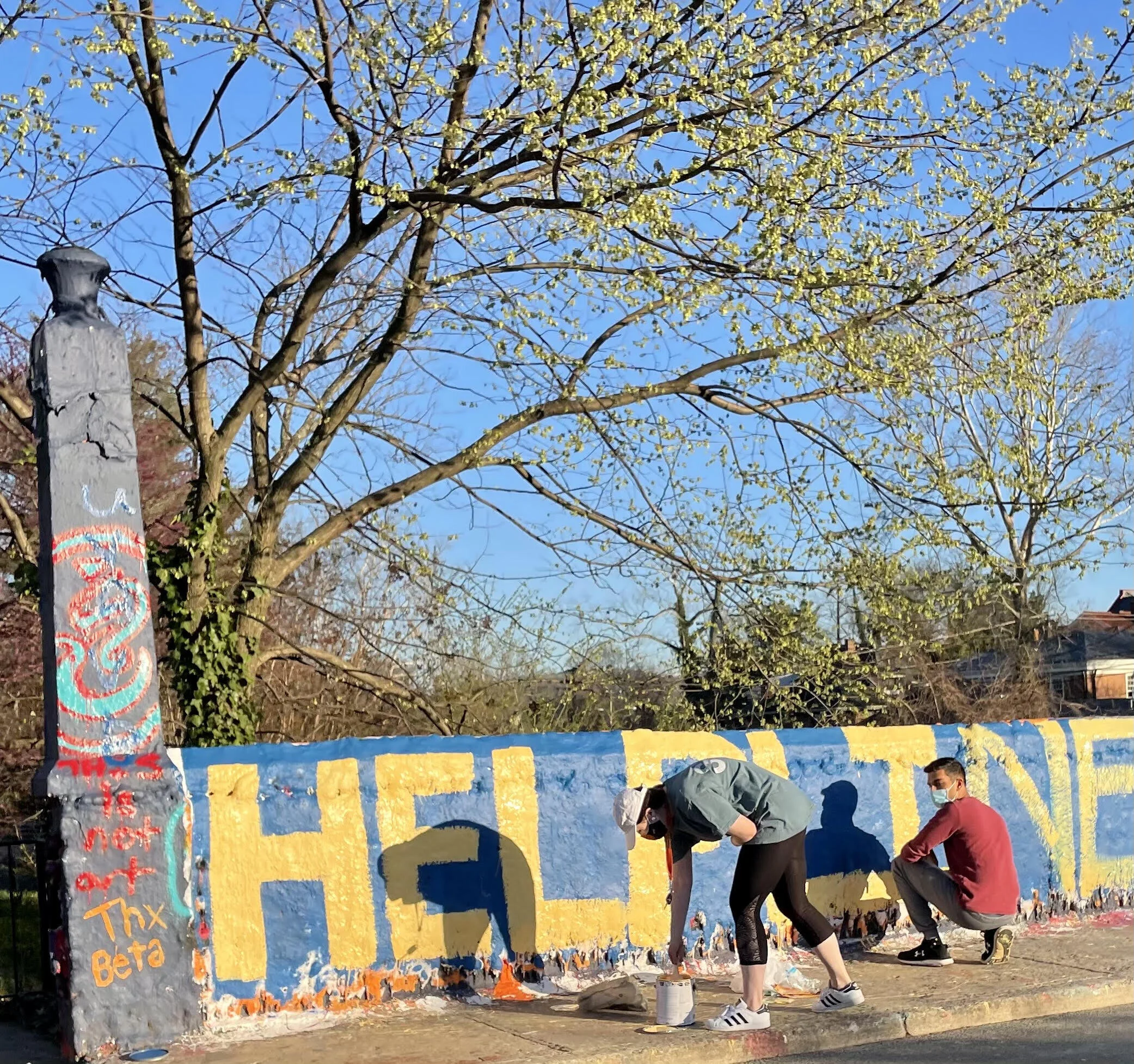
Painting Beta Bridge to raise awareness of HELPLine is a regular tradition.
That creativity and flexibility laid the groundwork for graduate school. “You can create opportunities where there isn’t one, if you’re willing to put your mind to it and have a bit of flexibility,” Hannah reflects.
She went on to pursue her Ph.D. in Clinical Psychology at Palo Alto University, building both research and clinical expertise. “I see myself as a clinician first, but research informs everything I do,” she notes. “The interventions I use are all rooted in strong scientific backing.”
Her specialty has become parent-focused interventions for children with disruptive behaviors, particularly Parent-Child Interaction Therapy (PCIT) and exposure-based treatments for anxiety.
Today, Hannah remains on the West Coast, having started her postdoctoral fellowship at the Child Mind Institute, a leading organization in children’s mental health advocacy and care.
Looking back, Hannah sees a clear throughline from her time on the HELP Line to her current clinical work. “That was the first place I learned to listen without judgment, to ask questions that lead to insight, and to truly sit with people in difficult moments,” she says. “Those are still the most important skills I use every day.”
By Cecilia Murphy