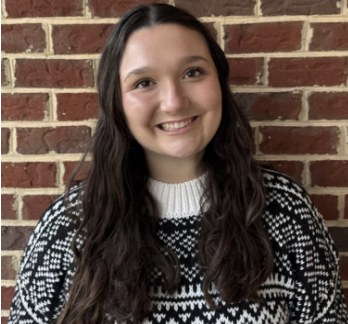
Madison House volunteer Bre Hodges
On Thursday mornings, Bre Hodges heads off Grounds and into a local preschool classroom, where familiar routines and relationships shape the morning. Some children chatter nonstop while others quietly observe from across the room. But when Bre gathers her things to leave, even the quietest students break their silence to sprint across the playground for one last goodbye hug.
“Honestly, it impacts me,” Bre said. “This is the best part of my week. Getting to spend time in the community reminds me how meaningful it is just to show up, connect, and be present.”
Bre is one of many Madison House volunteers whose service becomes far more than a line on a resume. Bre first joined Madison House during her second year at UVA as a classroom aide in Mrs. Geer’s first-grade class. This is Bre's second year volunteering in the classroom, where she is helping at a preschool. Bre is beginning to see how community engagement can shape her career goals, her understanding of Charlottesville, and the way she hopes to contribute long after graduation.
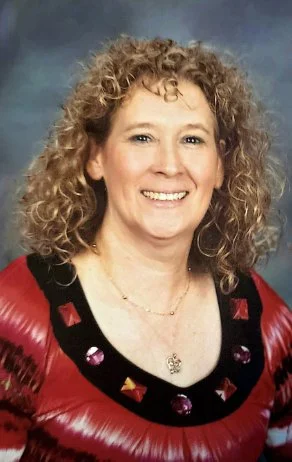
Mrs. Geer, Madison House community partner and mentor to volunteers
Mrs. Geer's first-grade classroom hosted many Madison House volunteers over the years, where they supported the learning already happening each day by helping with reading or math. They also built relationships with the students. In fact, according to Mrs. Geer, whenever Madison House volunteers step into a classroom, their presence offers younger learners a glimpse of what the path ahead might look like. “It opens the door for little ones to see older students who come into the classroom and show interest in them,” Geer said. “Six-year-olds have big egos—they love to show off, and they love to learn. But it’s important for them to see that even older students are still learning. I try to teach them that learning is constant. It never stops.”
These early encounters quietly plant ideas and inspiration that can last for years. Seeing older students who are still learning and working toward their own goals helps children begin to imagine what their own futures might look like. In that sense, Madison House volunteers do more than spend an hour in a classroom: they build relationships and leave impressions that can stay with students long after the school day ends.
For Bre, these classroom visits have shaped more than just her weekly routine, they are also helping guide her path forward. As a third-year student majoring in Speech Communication Disorders, Bre currently works with children in bilingual classrooms while preparing for a career in speech-language pathology.
“Honestly, it impacts me. This is the best part of my week. Getting to spend time in the community reminds me how meaningful it is just to show up, connect, and be present.”
At times, Bre’s academic coursework and her work with Madison House intersect in unexpected ways.
“I was taking phonetics at UVA at the same time they were learning phonemes in the classroom,” she said. “It was really cool to see that in real life.”
Moments like these bring classroom learning to life, not only for the young students, but also for the Madison House volunteers working alongside them.
For Mrs. Geer, the connection with volunteers has continued long after the semesters ended. Over the years, many former volunteers have stayed in touch by reaching out for letters of recommendation, career advice, or simply to share where life has taken them after graduation.
“I’d like to think those interactions continue,” Mrs. Geer said. “Whether I see them in the classroom or later out in the workforce, they’re still making a positive impact and helping others where they see a need.”
Experiences like these demonstrate how Madison House extends far beyond individual classrooms or semesters. The relationships formed through service often resurface years later, illustrating the ripple effect of community engagement.
At its heart, Madison House is about building connections that last. For students like Bre, volunteering offers the opportunity to engage with the greater Charlottesville community and learn alongside local educators and students. For teachers like Mrs. Geer, welcoming volunteers into the classroom provides additional support while giving young learners the chance to see older students continuing their own journeys of learning.
Perhaps the most powerful impact appears years later, when former volunteers carry these experiences forward and when young students remember the encouragement and example they encountered early on.
As Mrs. Geer puts it, positive community relationships are what keep everything moving forward.
For students considering how to get involved at UVA, the message from both Bre and Mrs. Geer is clear: the connections built through service can extend far beyond time on Grounds, shaping the ways students choose to contribute to their communities in the years ahead.
By Lily Bernstein